New
Summer smog: The invisible threat of hot days
29. 07. 2026
 Awareness
During sunny and hot summer days, summer smog appears more often in the air. It is also called photochemical, oxidative, or California or Los Angeles-type smog. It is not visible to the naked eye, but it can significantly affect our health. Its main and most dangerous component is ground-level ozone. What should we know about it?
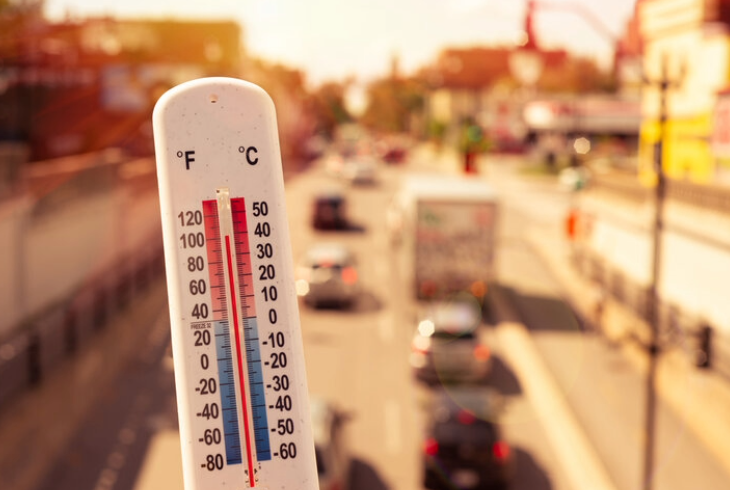
Ground-level ozone does not have its own direct source. It is formed as a secondary pollutant through complex chemical reactions in which intense solar UV radiation reacts with primary emissions of pollutants in the air, the so-called precursors. These are primarily nitrogen oxides (NOX) and volatile organic compounds (VOCs) originating mainly from internal combustion engines and industry. The ideal conditions for its formation are days with very high temperatures, intense sunlight and weak or no wind. Ground-level ozone concentrations therefore usually reach their maximum in the afternoon and evening during the summer.
There is only one ozone, but it depends on where it is found
Ozone is a molecule O₃, composed of three oxygen atoms. Whether it is beneficial or harmful to us depends primarily on the layer of the atmosphere in which it is found. While it protects us from harmful ultraviolet radiation in the high layers of the atmosphere, at the Earth's surface it is one of the significant pollutants that can adversely affect human health.
Stratospheric ozone (also referred to as the ozone layer) is crucial for life on Earth. 90% of the ozone molecules in the Earth's atmosphere are found in the stratosphere, i.e. at a height of approximately 30 to 35 km above the ground. Damage to this layer has led to the formation of the so-called ozone hole, which was intensively discussed especially in the 1990s. Thanks to the adoption of the Montreal Protocol in 1987 and the gradual reduction of CFCs, the ozone layer is now recovering. This is one of the successful examples of international cooperation in the field of environmental protection and proof that joint measures can bring real results.
Ground-level ozone is ozone molecules in the troposphere – the ground layer of the atmosphere at an altitude of 0 – 10 km above the Earth’s surface. It is the ozone that we breathe. High concentrations of ground-level ozone have an undesirable effect on human health. The highest concentrations of ground-level ozone are observed in clear weather and high temperatures. Ground-level ozone is classified as a pollutant whose concentrations are monitored and have established emission limits. High concentrations of O3 can even lead to the declaration of a so-called smog situation.
Impact on health
Summer smog has strong oxidizing effects – it irritates the eyes and mucous membranes of the respiratory tract, causes breathing difficulties, coughing, and long-term exposure can lead to inflammatory diseases. Oxidative stress is directly linked to the risk of developing cardiovascular disease, ischemic heart disease and hypertension (high blood pressure). It significantly contributes to the worsening of asthma symptoms and the development of chronic obstructive pulmonary disease (COPD).
Special attention should be paid to sensitive and vulnerable population groups. Children and young people are at risk because their lungs and immune systems are still developing. During the summer holidays, they spend much more time outdoors, which means they are exposed to this air pollution for a longer period of time.
Elderly people and their bodies are more prone to damage to their health, it is more difficult for them to react to deteriorated air quality. Chronically and acutely ill patients, especially people suffering from asthma, bronchitis, COPD or cardiovascular diseases, should consider staying outside during smog conditions.
Polluted air and smog situations pose a serious risk not only for pregnant women, but also for their developing fetus. Physiological changes in the mother's body that occur during pregnancy, such as increased respiratory rate, increase her susceptibility and sensitivity to inhaled pollutants. Exposure to air pollutants such as particulate matter (PM), ground-level ozone, and nitrogen dioxide is associated with an increased risk of gestational hypertension (high blood pressure) and preeclampsia. Ambient air pollution before birth can be one of the causes of negative birth outcomes. Exposure to carbon monoxide CO, nitrogen dioxide NO2, ozone O3 and dust particles significantly increases the risk of premature birth and low birth weight of the newborn.
Athletes and people working outdoors must also be on the lookout. An adult at rest inhales approximately 0.5 liters of air in one breath. During physical exertion, however, the need for oxygen increases and the volume of inhaled air can increase up to 3 to 4 liters. With accelerated and deep breathing during sports, a person inhales many times more harmful substances into the body, which can contribute to the aforementioned health problems.
How to improve the air quality in your surroundings
An ordinary person has many options to actively contribute to improving air quality and mitigating the smog situation. These steps mainly concern transport and access to your surroundings.
On days with high ground-level ozone concentrations, consider whether travel by car is necessary. Limiting individual car traffic during smog situations helps reduce the amount of precursors from which ground-level ozone is formed. For shorter distances, choose to walk, bike or scooter or use public transport. If you are using a motor vehicle, switch off the engine whenever you stop for a long time. Idling (for example, when waiting in front of school, house, shop or hospital) consumes fuel unnecessarily and produces a lot of pollutants that contribute to air pollution in our breathing zone. If you are traveling alone, consider carpooling with colleagues, neighbors or acquaintances. Take care of regular vehicle maintenance and maintain a smooth driving style.
How to protect yourself during a smog situation
Although the smog situation does not pose an immediate threat to life, it is important to follow these principles to minimize health complications:
Limit your time outdoors: Minimize time spent outdoors, especially in the afternoon and evening hours, when ground-level ozone concentrations are highest. Avoid increased physical activity, sports or heavy physical work in an open space, so as not to get an excessive amount of harmful substances into the lungs.
Ventilate sensibly: Don't leave windows open all day. Instead, ventilate briefly but intensively (ideally 3x to 4x a day), preferably in the morning.
Prevent further indoor and outdoor air pollution: Do not smoke or carry out activities such as painting, varnishing, etc. during a smog situation.
Keep your medication with you: Asthmatics and chronically ill patients should prepare and start treatment in time if the condition worsens.
Stay tuned
You can check current information, air pollution levels and smog alerts at any time:
Follow the official news and smog warnings on the pages of the Slovak Hydrometeorological Institute (SHMI), which declares smog situations when the limits are exceeded.
Follow the website www.dnesdycham.sk where you can find the Air Quality Index. The index works like a colored traffic light that informs about air quality (green = good, yellow = deteriorated, red = bad) and immediately tells you how to protect yourself and your loved ones from polluted air.