New
When we confuse air with climate
19. 03. 2026
 Awareness
In Testing 9 of Slovak language and literature, which monitors the level of education of ninth-graders, a text about transportation and air appeared, which inadvertently pointed out another problem. Even we adults are not always clear on environmental topics.
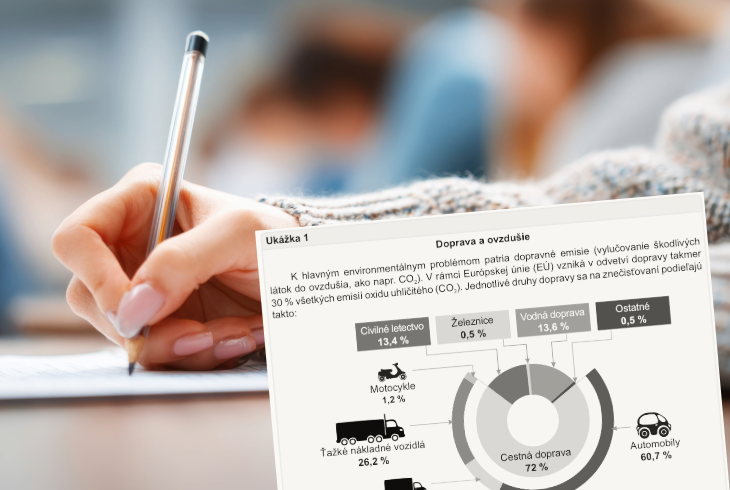
In the text that the ninth graders were supposed to read and analyze, carbon dioxide (CO₂) was included among the harmful substances in the air. However, CO₂ is not an air pollutant. It is a greenhouse gas that is a natural part of the air we breathe. The problem is not its presence, but that its share is increasing due to human activity, thereby affecting the climate. This is a misunderstanding that we unfortunately encounter quite often.
It is important to distinguish between two topics that are related, but not identical. Air quality concerns what we breathe. We monitor pollutants in the air such as PM dust particles, nitrogen oxides (NOX) and other substances that have a negative impact on health. Climate change, on the other hand, concerns long-term processes in the atmosphere, where greenhouse gases such as CO₂ play a major role.
Transport is a good example of where these areas naturally meet. It produces emissions that worsen the air in cities, and at the same time, by burning fossil fuels, it increases the amount of CO₂ in the atmosphere, thereby contributing to climate change. It is important to name things precisely not for the sake of formality, but so that we understand how human activity contributes to air quality and climate change, and what environmental measures and policies specifically contribute to.
The mistake in the text well illustrates the broader problem of environmental education in Slovakia. This often does not have sufficient space or systematic support, and therefore topics such as air, climate or sustainability appear rather sketchily and simplified. If we want students to be able to read with understanding and think critically, they also need to have an overview of what they read. Environmental education should therefore not be just a supplement, but a natural part of education that helps to navigate in today's world. Accuracy in terms is not a detail, it is the beginning of understanding.
Despite this inaccuracy, the topic of air deserves recognition for appearing in the testing at all. Slovakia has long had a problem with air quality, whether in cities due to the increase in individual car traffic, or in the countryside, especially during the winter months, due to the improper combustion of solid fuels in households. Education and awareness-raising play an important role in improving air quality.
If you want to learn more about air with your students, join our educational campaign Something is Hanging in the Air, or use our educational materials: https://dnesdycham.populair.sk/ponuka-pre-skoly-20260205